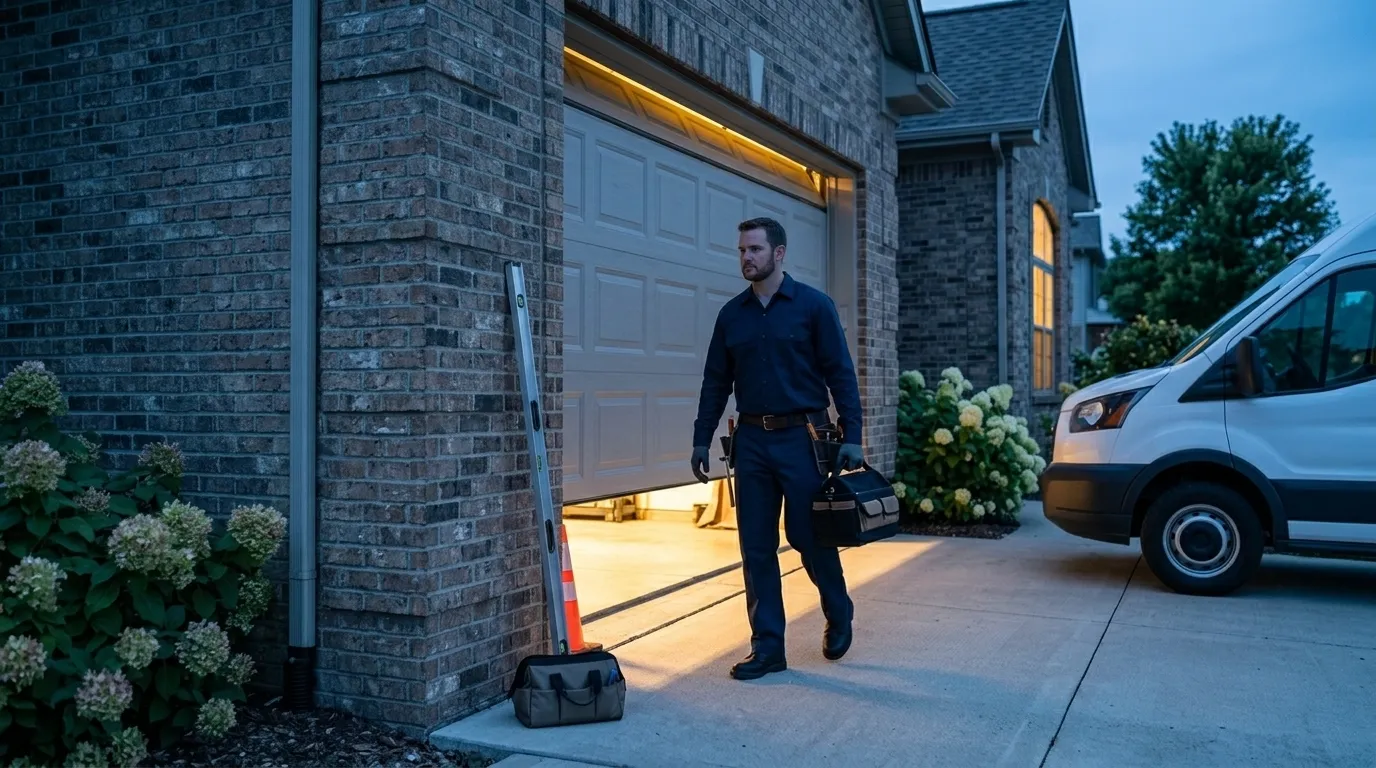
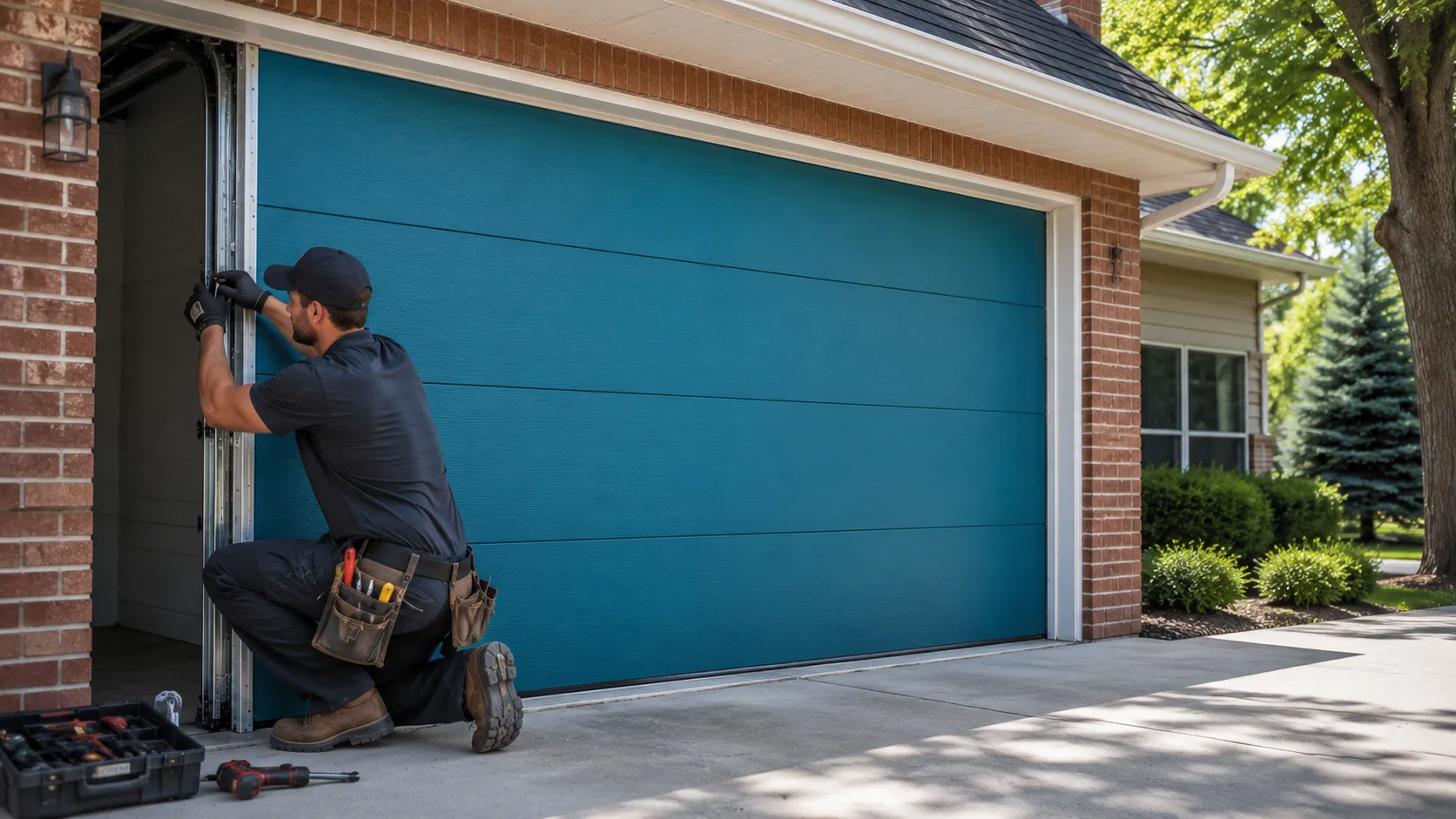
What We Actually Do
We work on garage doors and the hardware that makes them move - torsion and extension springs, openers, tracks, rollers, cables, and panels. Most of the houses we get calls from around here were built between 1938 and 1988, with the median landing around 1962, which means a lot of original steel sectional doors still running on hardware nobody has serviced since it was installed. That era of door is straightforward mechanically, but parts wear the way you'd expect after six decades: springs lose tension, tracks bend from a bumped car, rollers seize.
We don't do fencing, gates, or general contracting - just garage doors and openers, repair or replacement. If a door is beyond a reasonable repair, we'll tell you that instead of patching it and sending you a bill again in six months. The mild temperate climate here means we're not fighting the kind of freeze-thaw cycles or extreme heat that wreck springs and seals faster elsewhere, so a well-maintained door on this kind of housing stock can run a long time on the original opener before anything needs swapping.
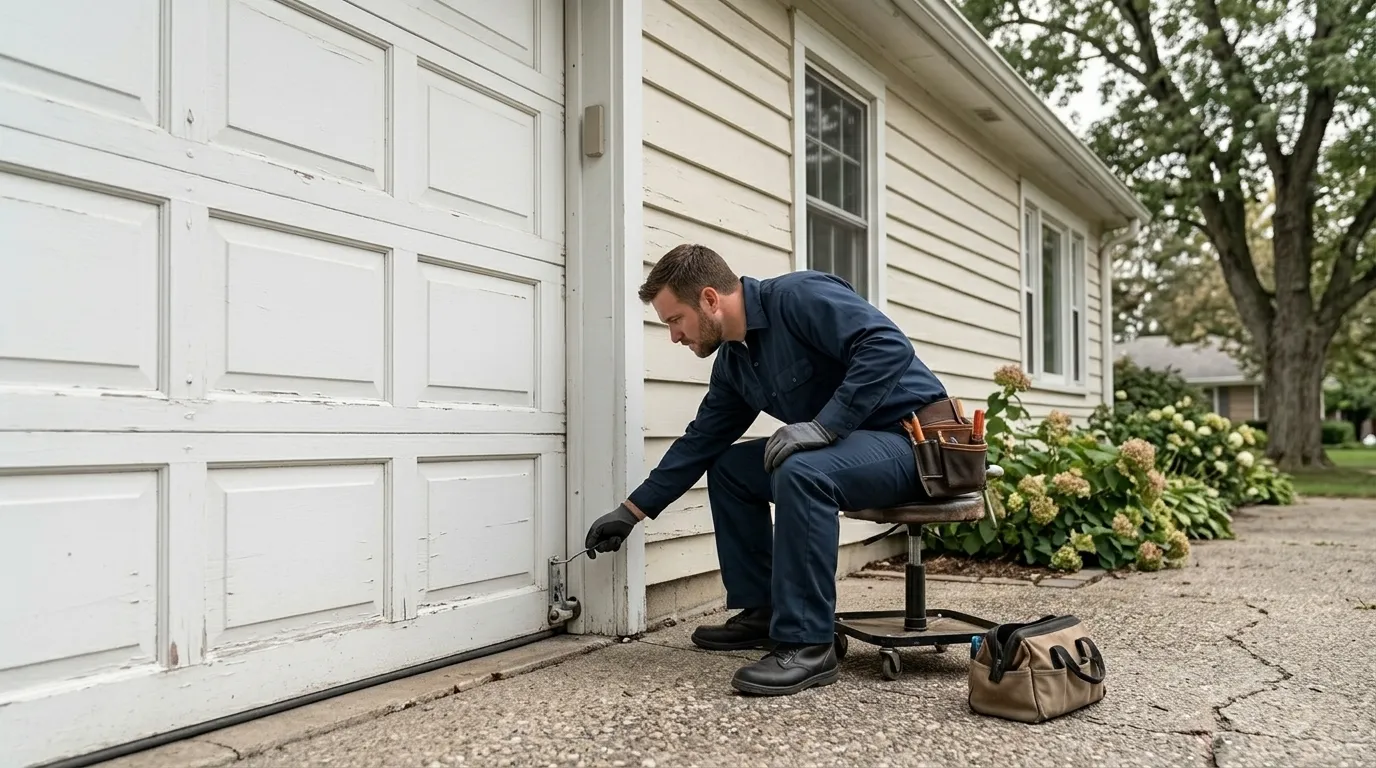
Who You Are Dealing With
This is a garage door company, not a call center that dispatches whoever's nearby. Median household income across the service area sits at $152,131, and the housing is a mix of older single-family stock and multi-unit buildings, so the jobs we see range from a single sticky roller on a house-front door to opener and track work on shared garage entries. That mix is normal for a service area covering 449,915 households and 167,337 owner-occupied houses.
We're not going to invent a founding year or a headcount to sound bigger than we are - what matters on a service call is whether the person at your door knows torsion springs from extension springs and can explain what's actually wrong before touching anything. That's the standard we hold the work to.
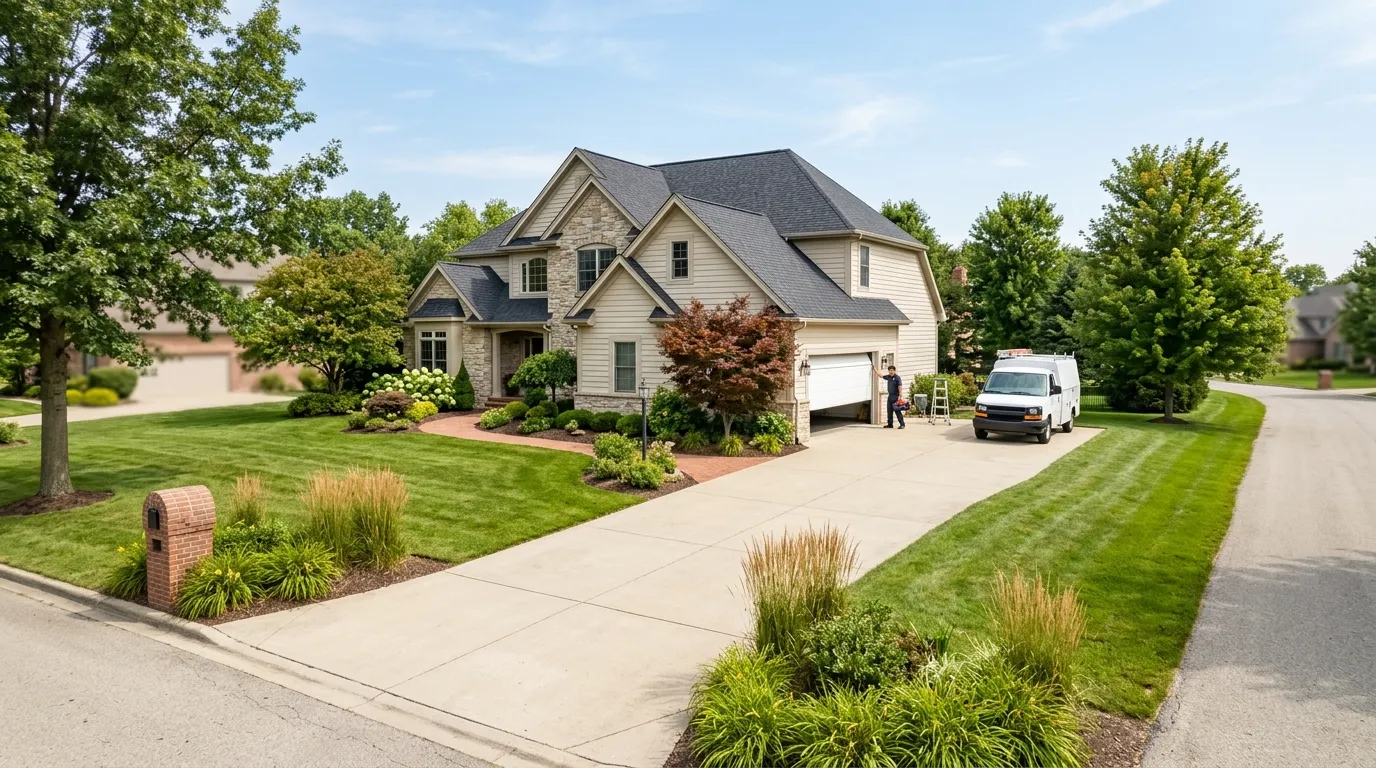
After You Call
When you call, we ask what the door is doing - won't open, opens partway, opener runs but nothing moves, door came off track - because that narrows down whether it's a spring, a cable, a sensor, or the opener itself before anyone drives out. We schedule a visit, diagnose on site, and give you a price for the repair before starting.
Most of what we see on 1960s-70s stock doors is spring failure or worn rollers and hinges, and those are same-visit fixes in the normal case. Full door replacement, custom sizing, or backordered opener parts can take longer - we'll tell you upfront if a part has to be ordered rather than promise a timeline we can't hit. We'd rather say
placeholder