San Francisco, CA
Service
Commercial Garage Door Repair in San Francisco
Commercial garage door repair for San Francisco businesses - rolling steel, sectional, and dock doors serviced across the Bay Area's mild coastal climate.
- Licensed & Insured
- Same-Area Service Calls
- Upfront Pricing
What Happens When You Call
-
1
Call or Request a Quote
Tell us what the door is doing and roughly how old the house is - that alone points us toward the likely part before a truck leaves.
-
2
On-Site Diagnosis
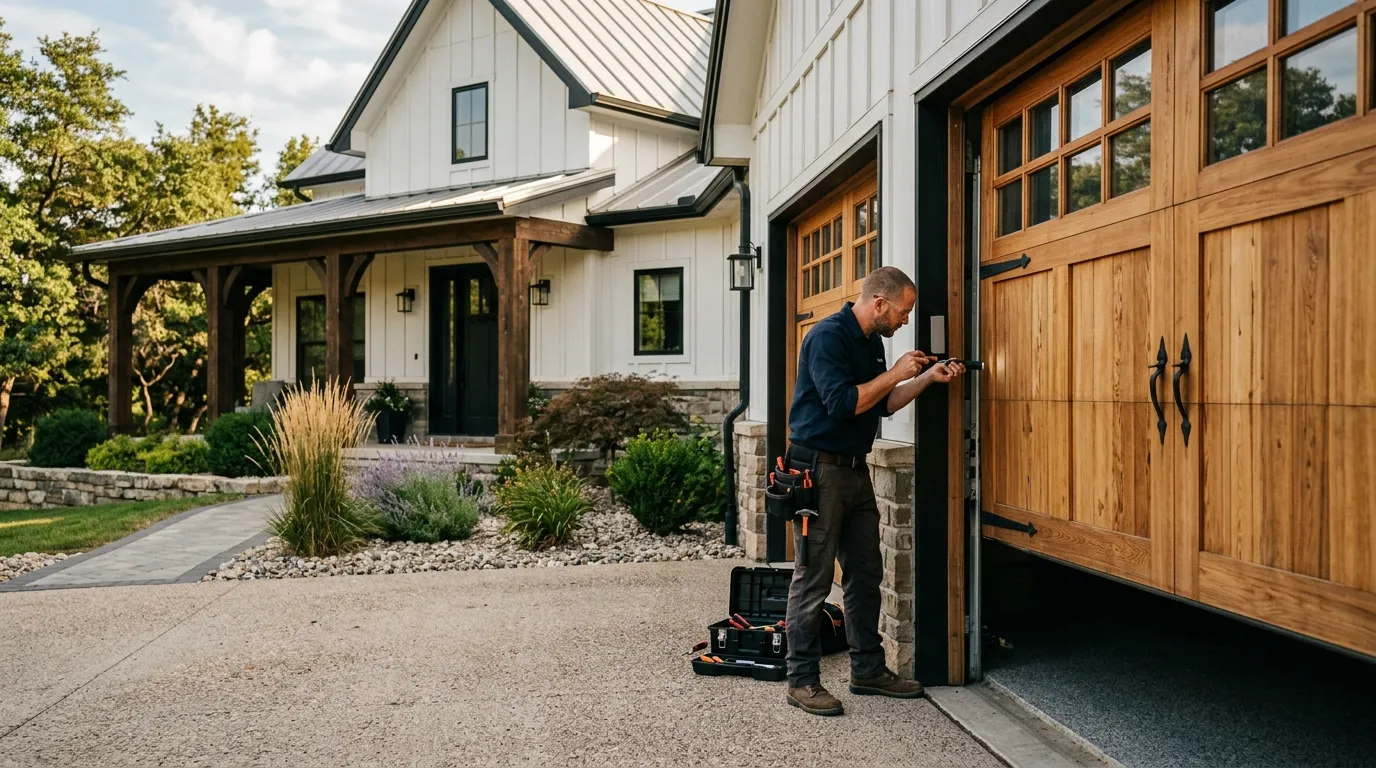
A tech checks the spring, cables, tracks, and opener in person and tells you plainly what is actually wrong.
-
3
Straight Price, No Surprises
You get a number before any work starts. It covers parts and labor, nothing added after the fact.
-
4
Fixed the Same Visit
Most repairs are done in one trip. If a part needs sourcing, we tell you that upfront instead of guessing.
Booking a Visit
Most calls for commercial door work start the same way: a door that won't seal at the bottom, or an opener that trips its breaker halfway through a delivery window. When you call, we ask what the building does - retail bay, warehouse dock, parking structure, small manufacturing - because that tells us what's probably wrong before the truck even leaves. A rolling steel door on a loading dock fails differently than a sectional door on a strip-mall storefront, and we'd rather ask two questions on the phone than guess twice on-site.
We schedule around your operating hours where we can, since a stuck bay door mid-shift costs a business more than the repair itself. One limitation worth saying plainly: not every specialty rolling-steel operator or proprietary motor board is something we carry on the truck.
Some commercial units run gear you only see on a handful of buildings, and if that's the case, the first visit is a diagnosis and the part comes on the second. We'd rather tell you that up front than pretend every job closes in one trip.
For other services this company runs, the home page has the full list.
What the Repair Takes
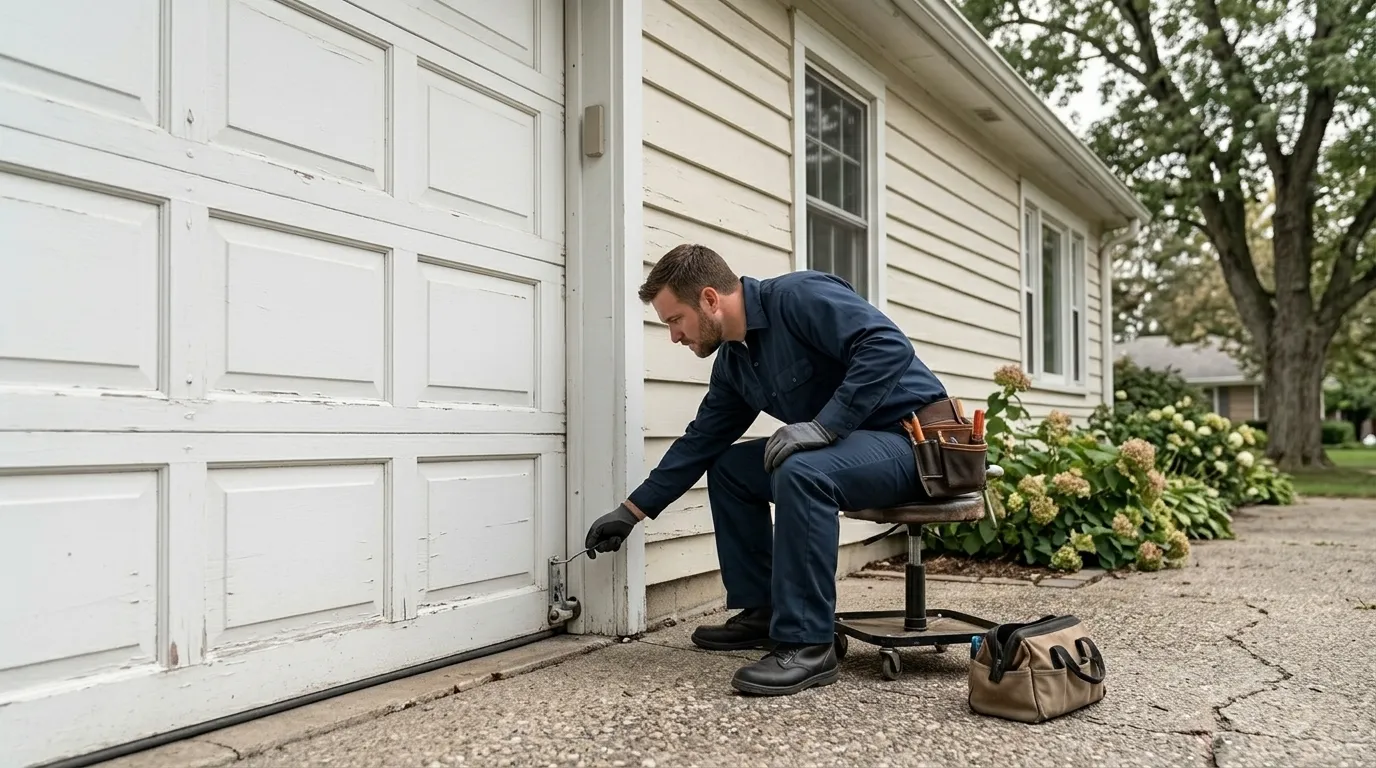
Commercial doors carry more steel and run more cycles than a residential double, so the hardware is built heavier - thicker torsion springs, reinforced tracks, openers rated for continuous or near-continuous duty rather than a few trips a day. A repair usually means one of three things: the spring system is undersized or worn out for the cycle count it's actually seeing, the track has racked out of alignment from repeated hard stops, or the opener's logic board is cycling the motor past what the gearing can take.
On a rolling steel door, the work is different again - slat replacement, barrel and bracket alignment, guide corrosion - and it takes different tools than a sectional door job. We size springs to the door's actual weight and cycle rate, not a stock chart, because a door that opens sixty times a day needs different hardware than one that opens six.
The honest limitation here: if a commercial door has been running years past its intended cycle life and the track, hardware, and opener are all near failure at once, patching one part is a short-term fix. At that point replacement is usually the better spend than a repair that buys a few more months.
Why It Happens Here
San Francisco sits in a mild temperate climate band, with no hard freeze to worry about but no season off for a door that runs at full cycle count all year. In places with real winters, commercial doors get a slow season - snow closes half the lot, deliveries thin out, cycle counts drop for a few months and hardware gets a rest.
Here, that reset doesn't happen. Doors run at the same pace in January as they do in July, so springs and rollers rack up wear on a straight line instead of a seasonal one.
The service area holds 449,915 households and 167,337 owner-occupied houses, with a median household income of $152,131. That's a dense, high-value market, and it keeps small commercial bays, dock doors, and parking structures busy year-round in a way that shows up as more service calls per door than you'd see somewhere with slower foot traffic.
Housing across this area went up mostly between 1938 and 1988, with a median build year of 1962. It's not a claim about any one commercial building, but it tells you the surrounding blocks are old enough that door openings and headroom weren't built with today's higher-cycle steel doors in mind, and retrofits sometimes fight the opening rather than fit it.
What You Are Seeing
A door that stops halfway and reverses on its own is usually the opener's travel limits or the safety sensors, not the door itself. A door that's heavy to lift by hand, or one where the opener strains and hums before it moves, points to a spring that's lost tension - on a commercial door that's a two-person job at minimum, not something to force by hand.
A rolling steel door that binds partway up, or rattles hard in the guides, is usually a bent slat or a guide that's racked out of true from repeated hard stops. If the door slams the last foot of travel instead of settling, that's often the spring again, or a cable that's stretched past its working length.
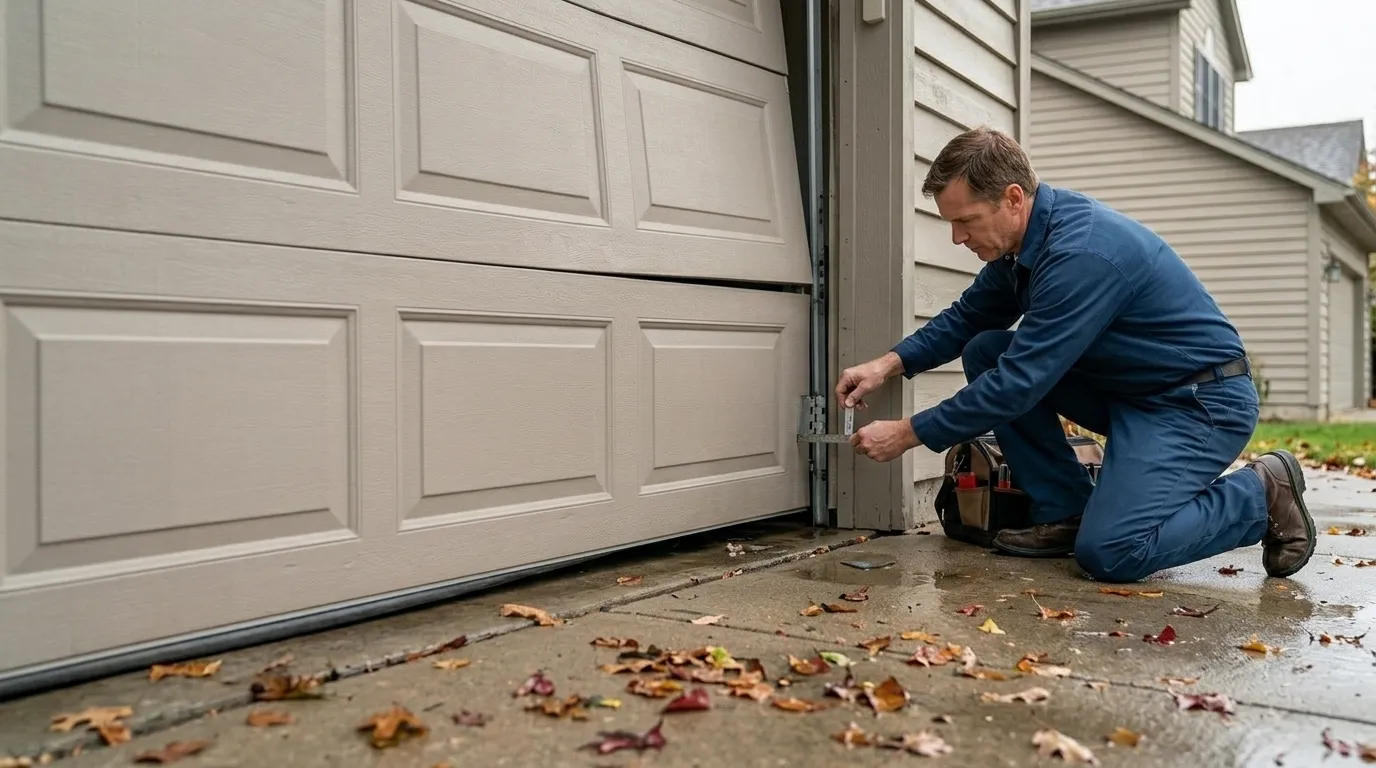
Grinding or popping from the track during travel, especially near the top, is frequently a bent track section rather than the rollers - swapping rollers on a bent track buys you a week, not a fix. If a door has been sticking or straining for a while and you're only now noticing, that generally means the failure has been building for months, not days, and it's worth a look before it fails on a delivery you can't afford to lose.
Daly City, Sausalito, Colma, and Brisbane all sit about seven miles out, with Emeryville and Tiburon a mile further at eight, and this same service pattern holds across those areas.
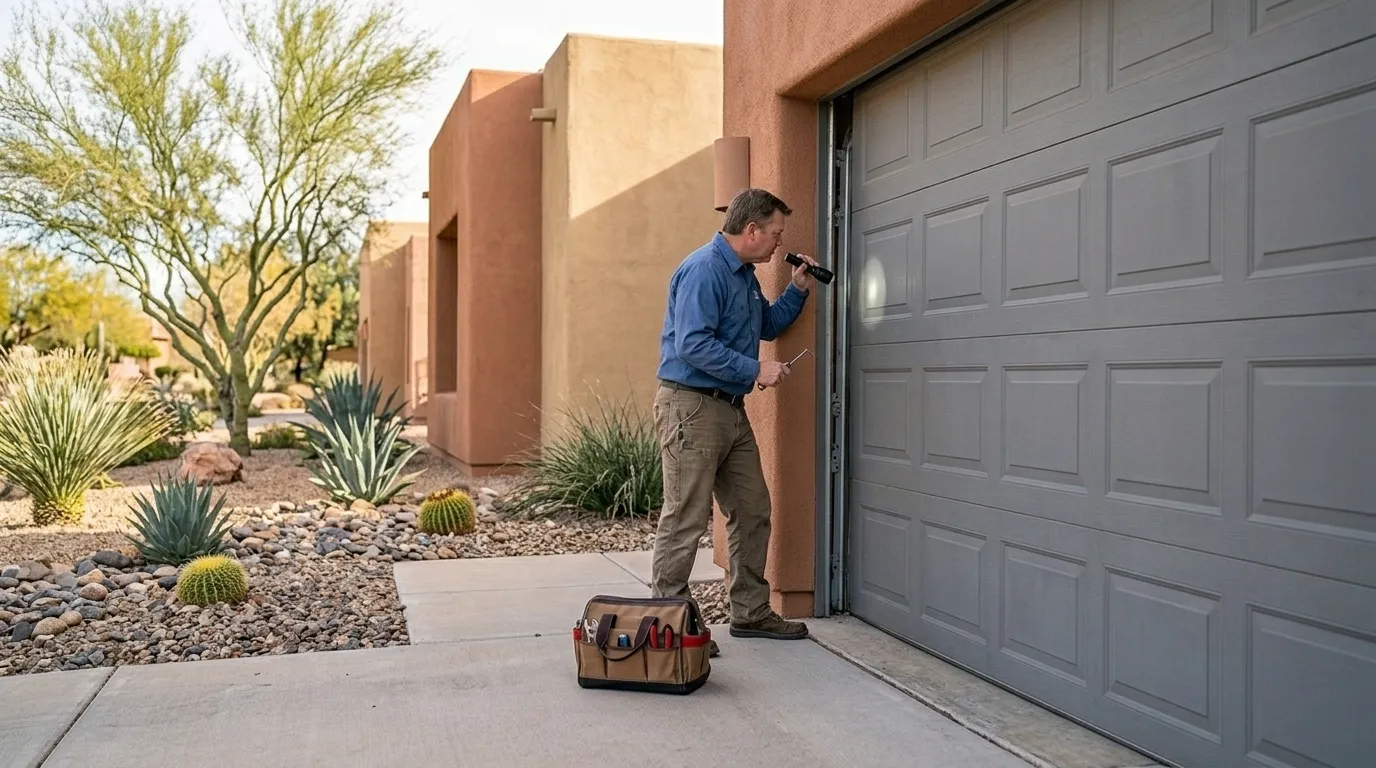
Talk to a Technician Before You Book
Describe what the door is doing and get a straight answer on what it likely needs.
Jobs Like Yours
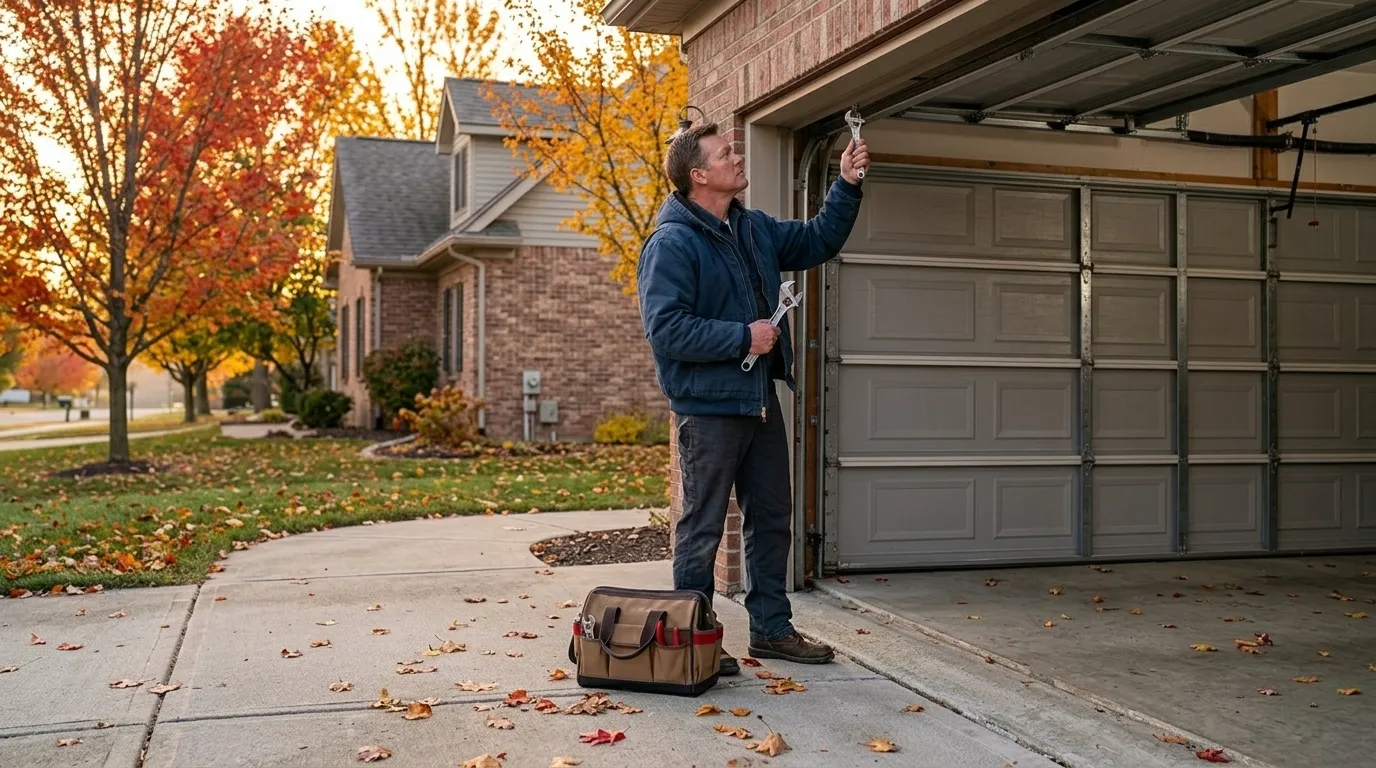
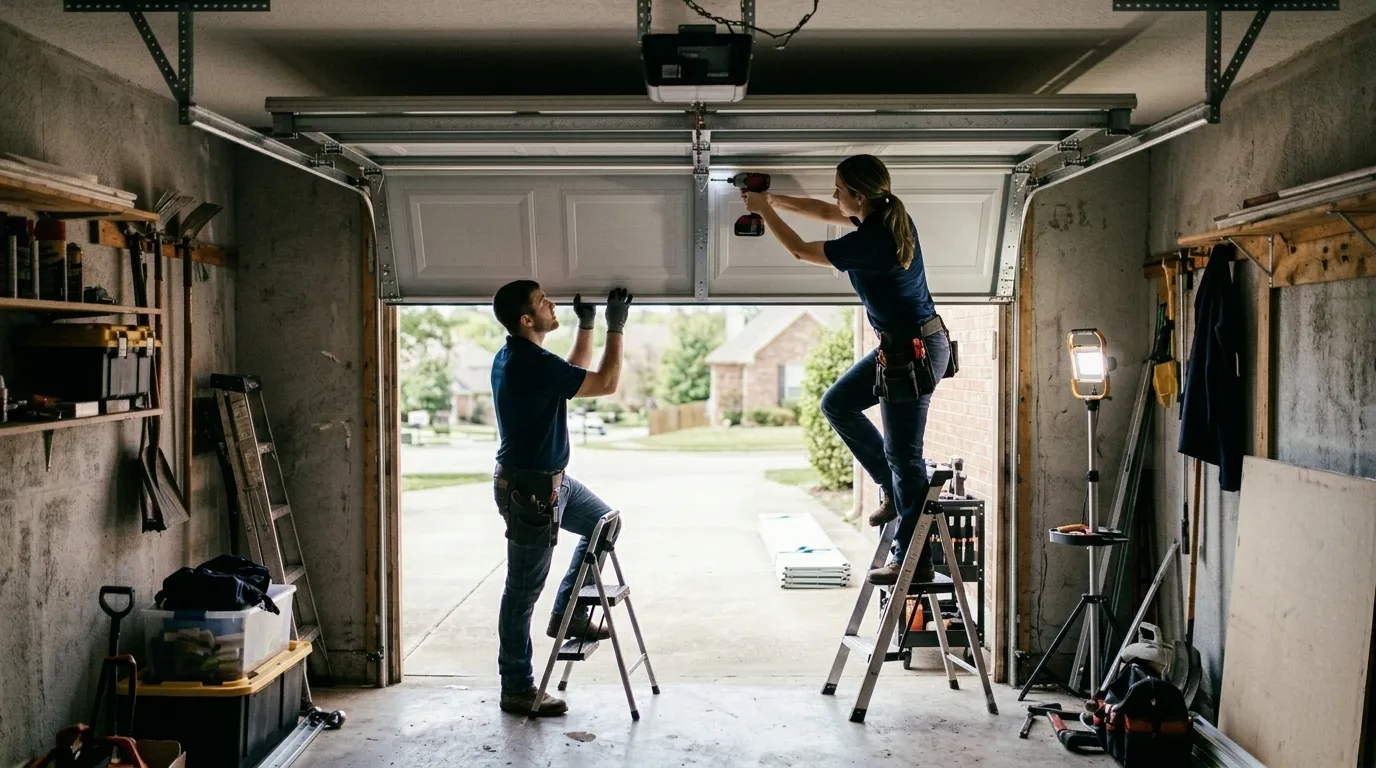
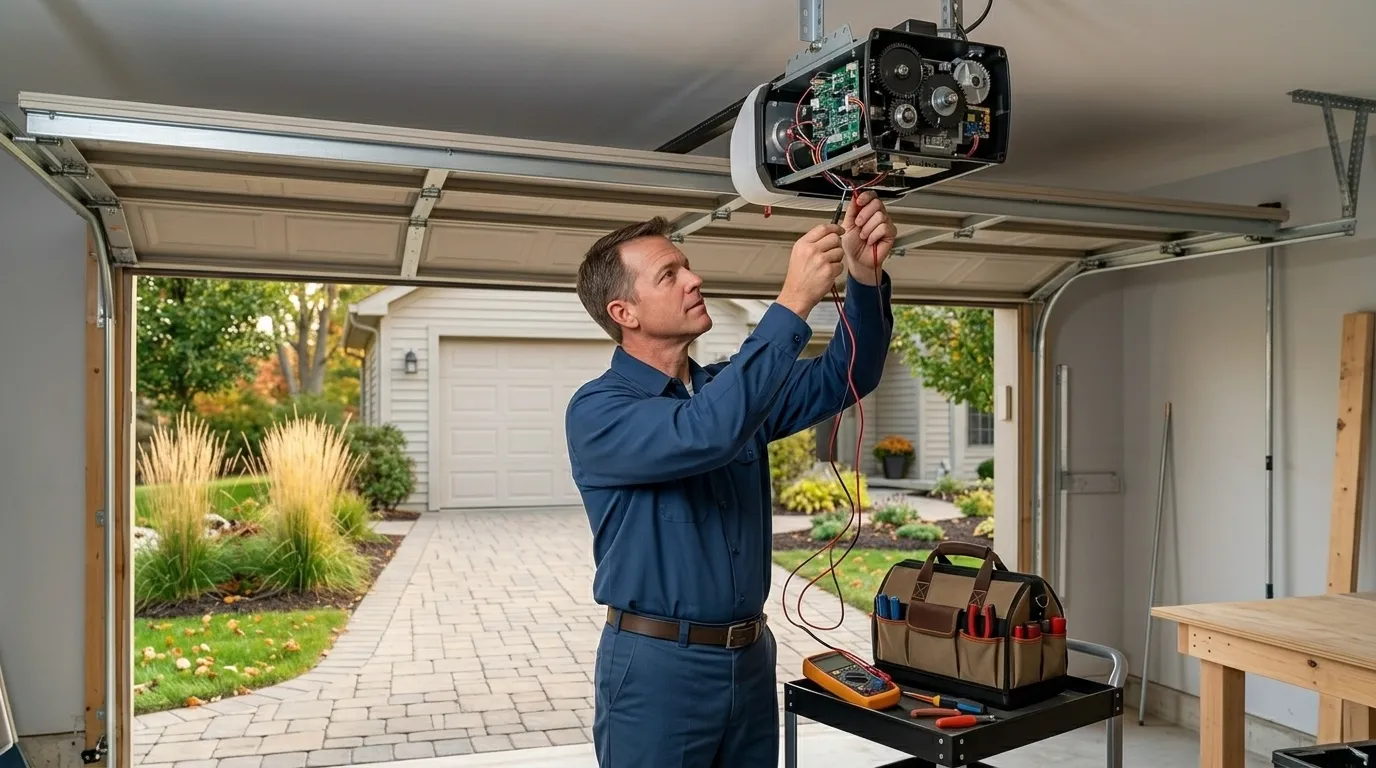
Recent work from this service line.
Why San Francisco Calls Us
Frequently Asked Questions
Do you work on rolling steel doors, or just sectional overhead doors?
We work on both. Rolling steel doors - the kind you see on loading docks and some storefronts - need different tools and parts than a sectional overhead door, and we bring the right kit once we know which type you're calling about, so tell us the door type when you book.
How fast can you get to a commercial door that's stuck open?
We don't have a fixed response time to quote you, since it depends on the day and where the job sits in the service area. Call and tell us the situation - a door stuck open on a dock is a different priority than one that's just noisy - and we'll give you a straight answer on timing.
Can a bad opener board really trip a breaker?
Yes. A logic board or motor that's cycling past its rated duty can pull enough current to trip a breaker mid-cycle, especially on a door running more starts and stops per day than the opener was built for. It reads like an electrical problem but the fix is often on the door side.
Is it ever better to replace a commercial door than repair it?
Sometimes. If the springs, track, and opener are all near the end of their working life at the same time, a repair buys a few months at best. When that's the situation, we'll say so rather than run up a repair bill on a door that needs replacing anyway.
Need Commercial Garage Door Repair in San Francisco?
Call now for straight answers on cost and timing.