
San Francisco, CA
Spring Repair in South San Francisco
Garage Door Spring Repair for South San Francisco Homes
Torsion springs on South San Francisco's 1960s garage doors wear differently than newer stock. San Francisco Garage Door Pros travels 9 miles to fix them right.
- Licensed & Insured
- Same-Area Service Calls
- Upfront Pricing
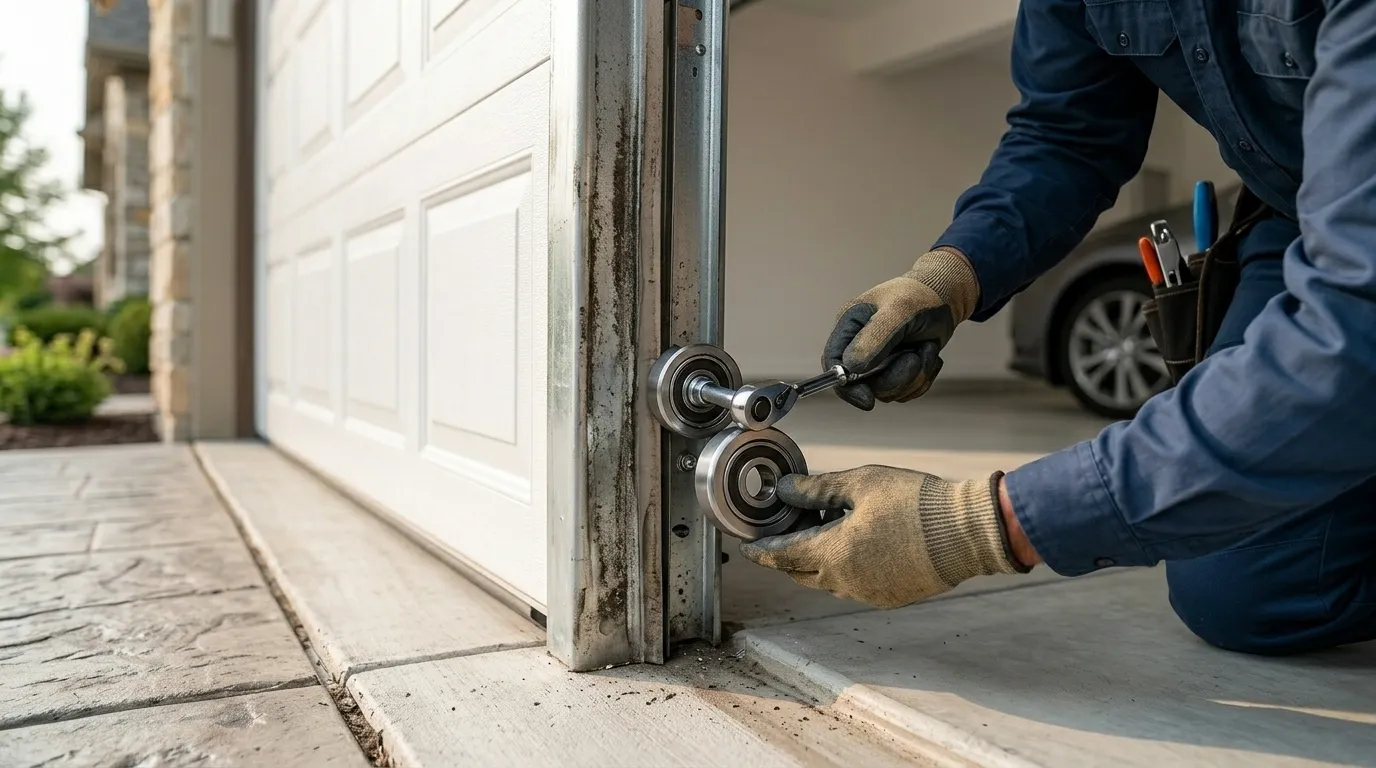
What Happens When You Call
-
1
Call or Request a Quote
Tell us what the door is doing and roughly how old the house is - that alone points us toward the likely part before a truck leaves.
-
2
On-Site Diagnosis
A tech checks the spring, cables, tracks, and opener in person and tells you plainly what is actually wrong.
-
3
Straight Price, No Surprises
You get a number before any work starts. It covers parts and labor, nothing added after the fact.
-
4
Fixed the Same Visit
Most repairs are done in one trip. If a part needs sourcing, we tell you that upfront instead of guessing.
Booking a Visit
When you call about a spring, the first thing we ask is how old the house is, because in South San Francisco that answer is almost always the same: early 1960s. That single fact tells us more about the job than a photo would. Springs from that era were sized for doors and openers that don't exist anymore, and a lot of houses here still have the original torsion hardware bolted to the same header it went up on.
We run this job from our San Francisco location, about 9 miles from South San Francisco, so we're not sitting in the neighborhood waiting on calls. That means we ask you to describe what's happening before we come - does the door not move at all, does it shudder halfway up, is there a gap in the coil you can see. It helps us bring the right spring size instead of guessing on site.
We don't do same-day emergency dispatch here. If your door is stuck shut with a car inside, tell us that up front so we can talk you through getting it open safely while you wait for the visit. A broken spring is not usually a middle-of-the-night crisis, but a trapped car can feel like one.
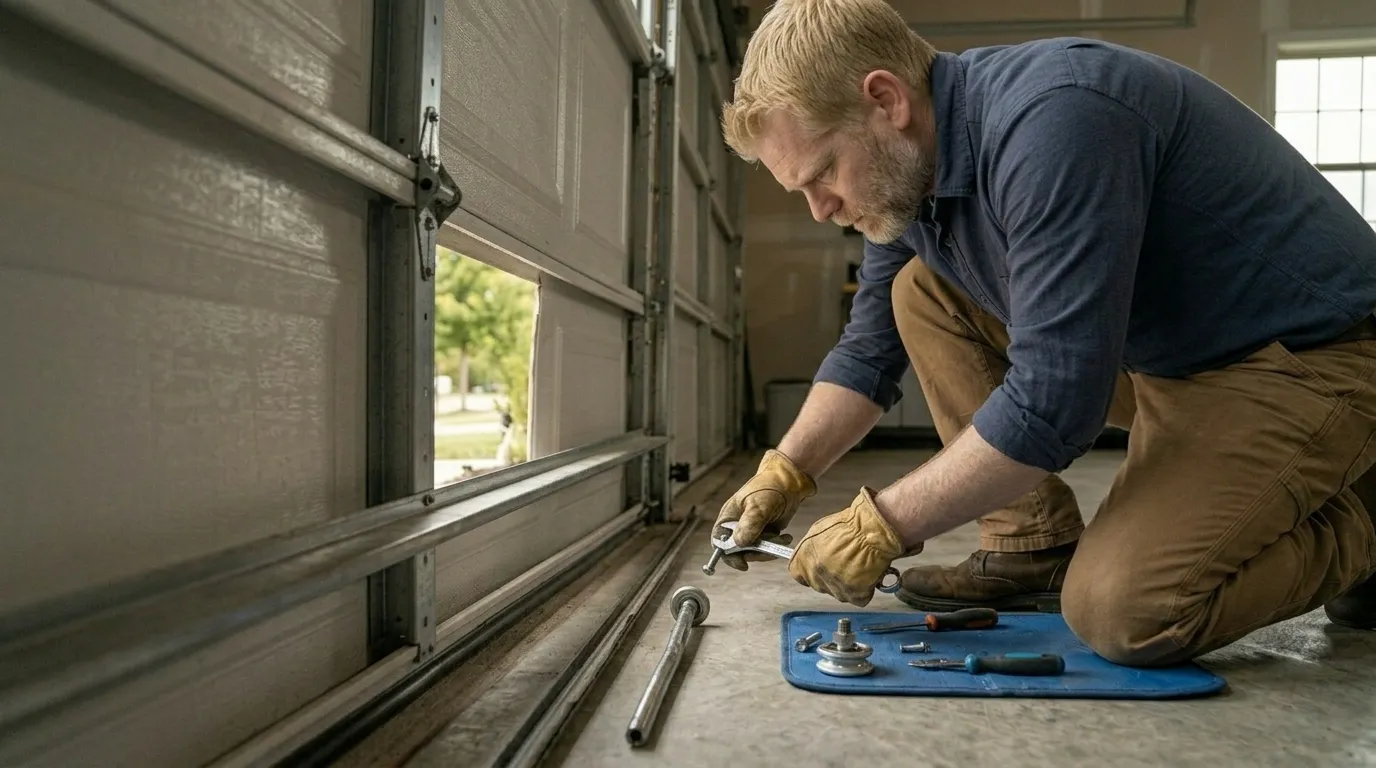
What You Are Seeing
Most of South San Francisco's housing went up in that same narrow window as the region's - median year built 1963, which lines up almost exactly with the wider stock we see across the service area (1938 to 1988, median 1962). That means a big share of doors here are still running on torsion springs sized for the heavier, single-layer steel panels that were standard when the houses were framed, not the lighter insulated doors sold today.
What you'll notice first is usually the door hanging unevenly, or the opener straining and reversing partway up. If a torsion spring has snapped, you'll often hear it - a loud bang from the garage, sometimes mistaken for something falling. Extension springs, the ones that stretch along the horizontal tracks rather than sitting on a shaft above the door, show wear differently: fraying, stretching, or a cable that's gone slack on one side.
The mild coastal climate here doesn't put the kind of thermal stress on metal that inland heat or hard freezes do, so when a spring fails in South San Francisco it's almost always fatigue from age and cycle count, not weather damage. That's a useful thing to know when you're deciding whether the fix is a spring or something bigger.
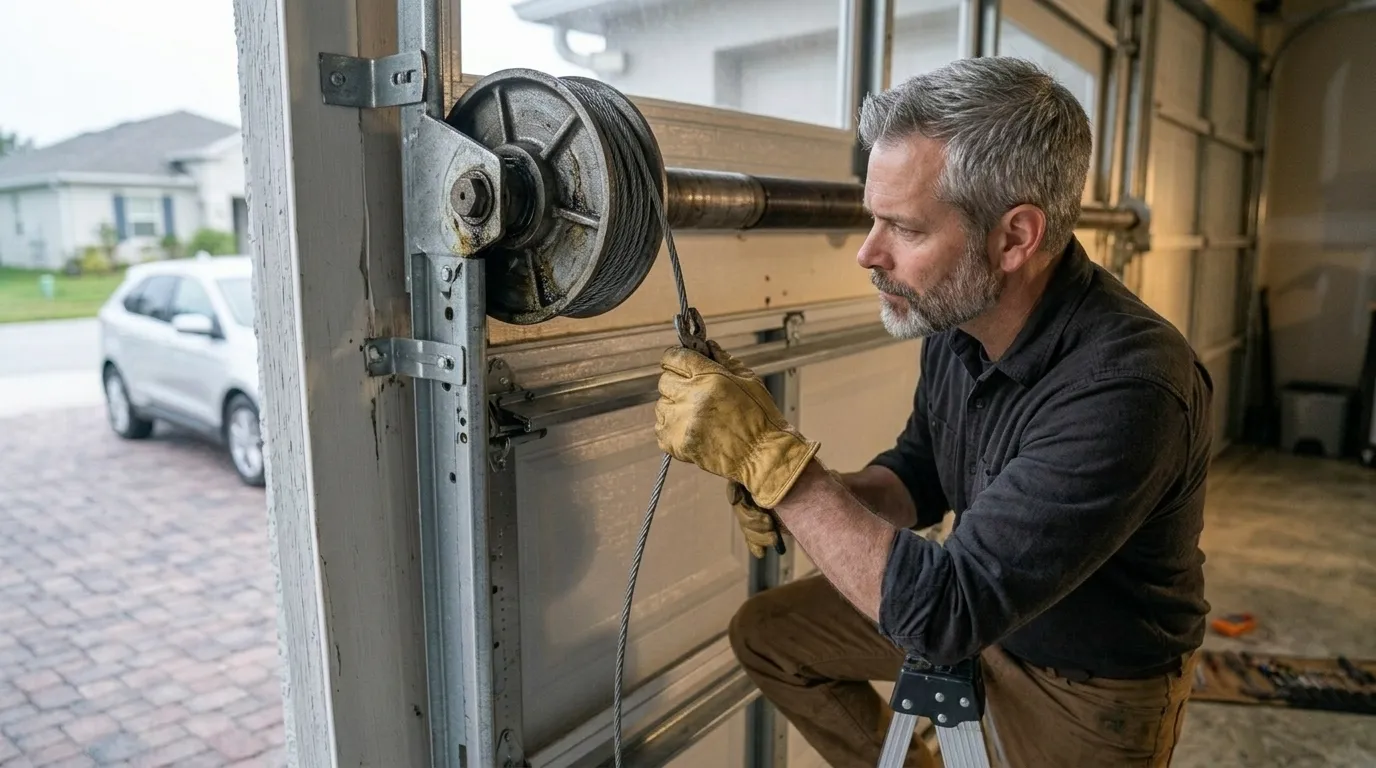
What Can Go Wrong
A spring failure rarely stays a spring problem on a house this age. If the torsion shaft or the cable drums have been carrying an undersized or mismatched spring for years - a common patch job on older doors - the shaft itself can be bent by the time it finally lets go. Bearings at either end wear out on the same schedule as the spring, and on 1960s hardware those bearings are often the original plate style, not the ball-bearing units sold now.
On doors that have had one spring replaced without the other, you get uneven tension: the door racks sideways in the track, chews up rollers, and eventually cracks a panel at the corner. We see this often enough on original one-piece doors from this era that we always check both springs, not just the one that failed.
The honest limitation here: if the door itself is the original steel panel from the early 1960s, replacing the spring might buy you a working door but not a quiet or well-balanced one. At some point the labor of chasing hardware that nobody stocks anymore costs more than swapping the door for current stock. We'll tell you when we think you've hit that point instead of billing you toward it.
Doing It Yourself
A torsion spring is under enough stored tension to break a wrist or worse if it lets go while you're working near it, and that risk doesn't scale down because the house is small or the door looks light. We don't recommend homeowners replace torsion springs themselves, full stop - this isn't a hardware-store fix.
What you can safely check yourself: whether the cables on either side of the door look frayed, whether the door is sitting level when it's down, and whether the opener is straining before it reverses. Any of those tells us what's coming when we get there and can shorten the visit.
Given the median income in the wider service area sits around $152,131 and South San Francisco itself runs closer to $135,909, we get asked a fair amount whether it's worth paying for a full inspection versus just the spring swap. Our answer: on a house built around 1963, checking the drums, bearings, and cable condition at the same time as the spring is worth the extra few minutes, because those parts are already near the end of their life on the same schedule.
Talk to a South San Francisco Technician First
Describe what the door is doing and get a straight answer on what it likely needs.
Other Garage Door Services in South San Francisco
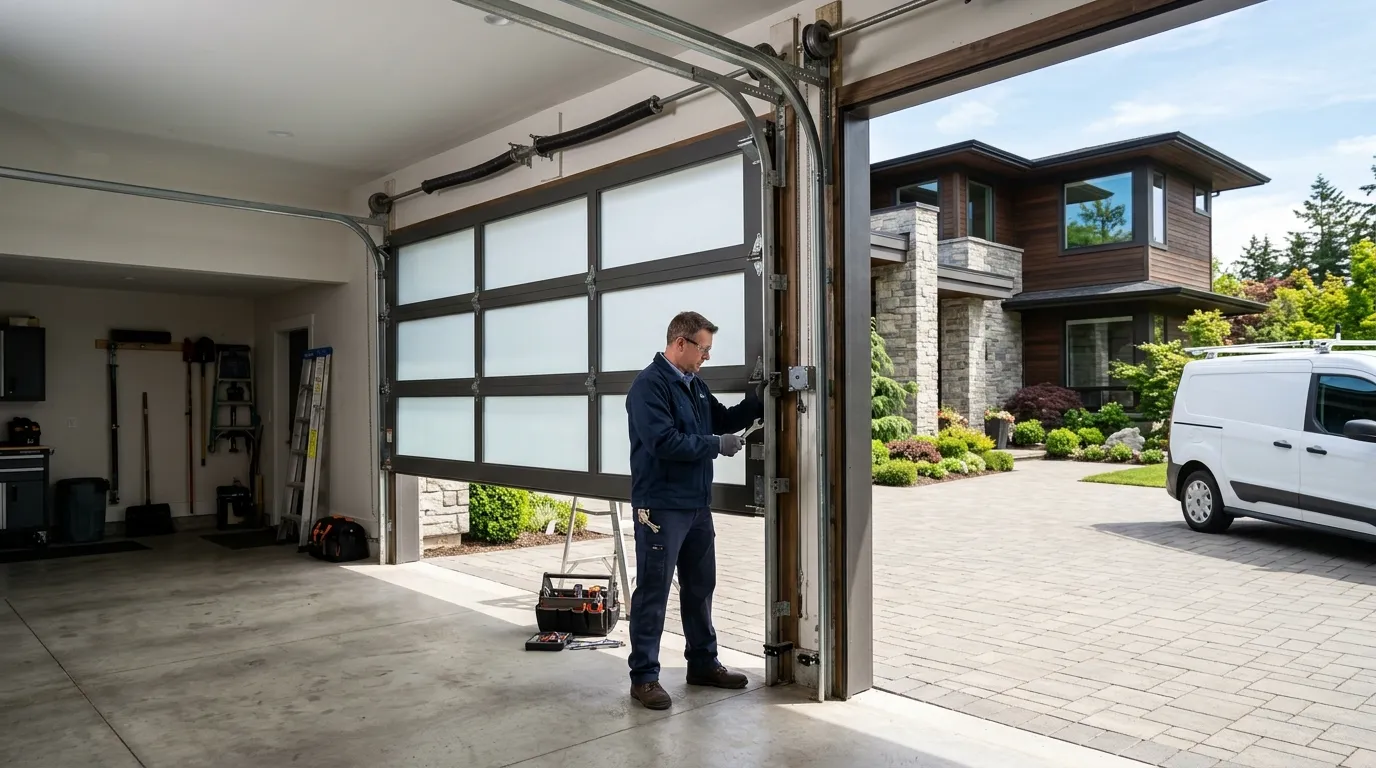
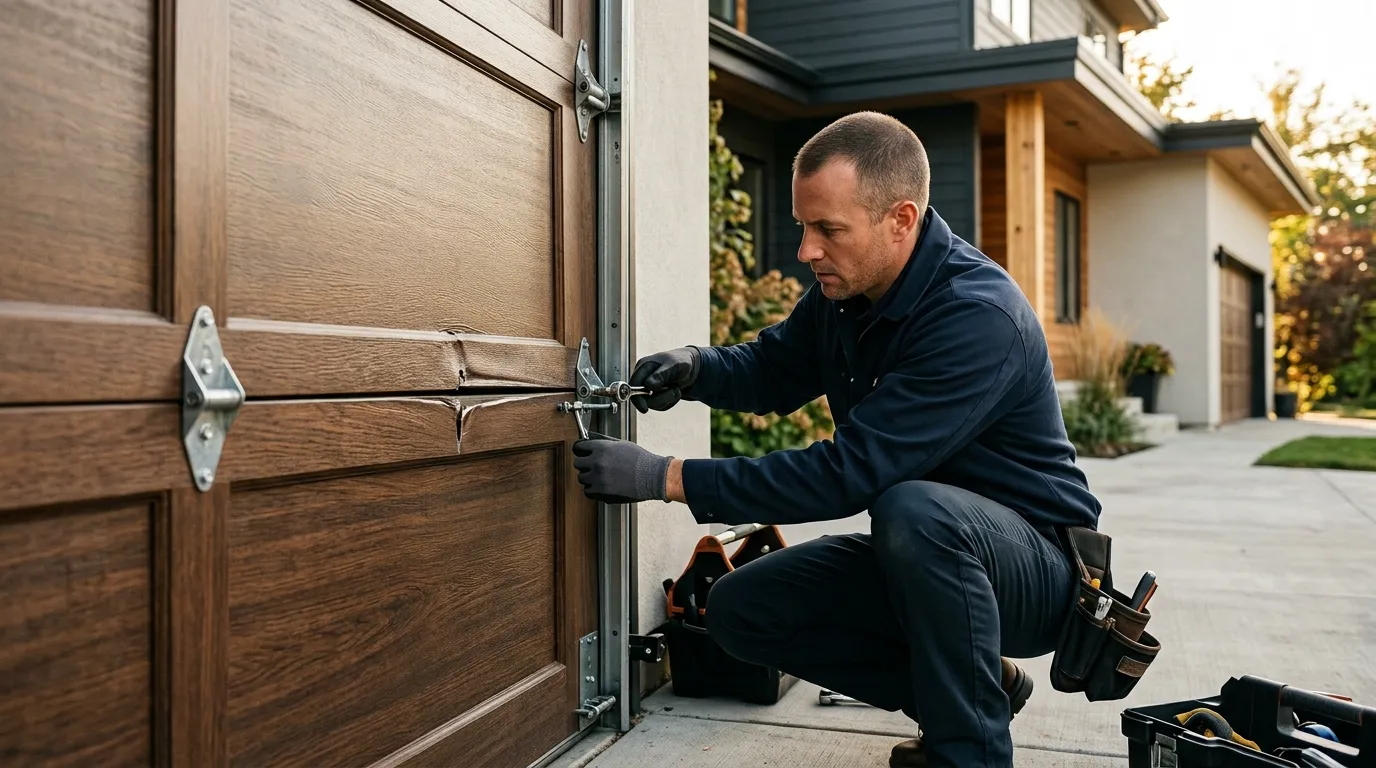
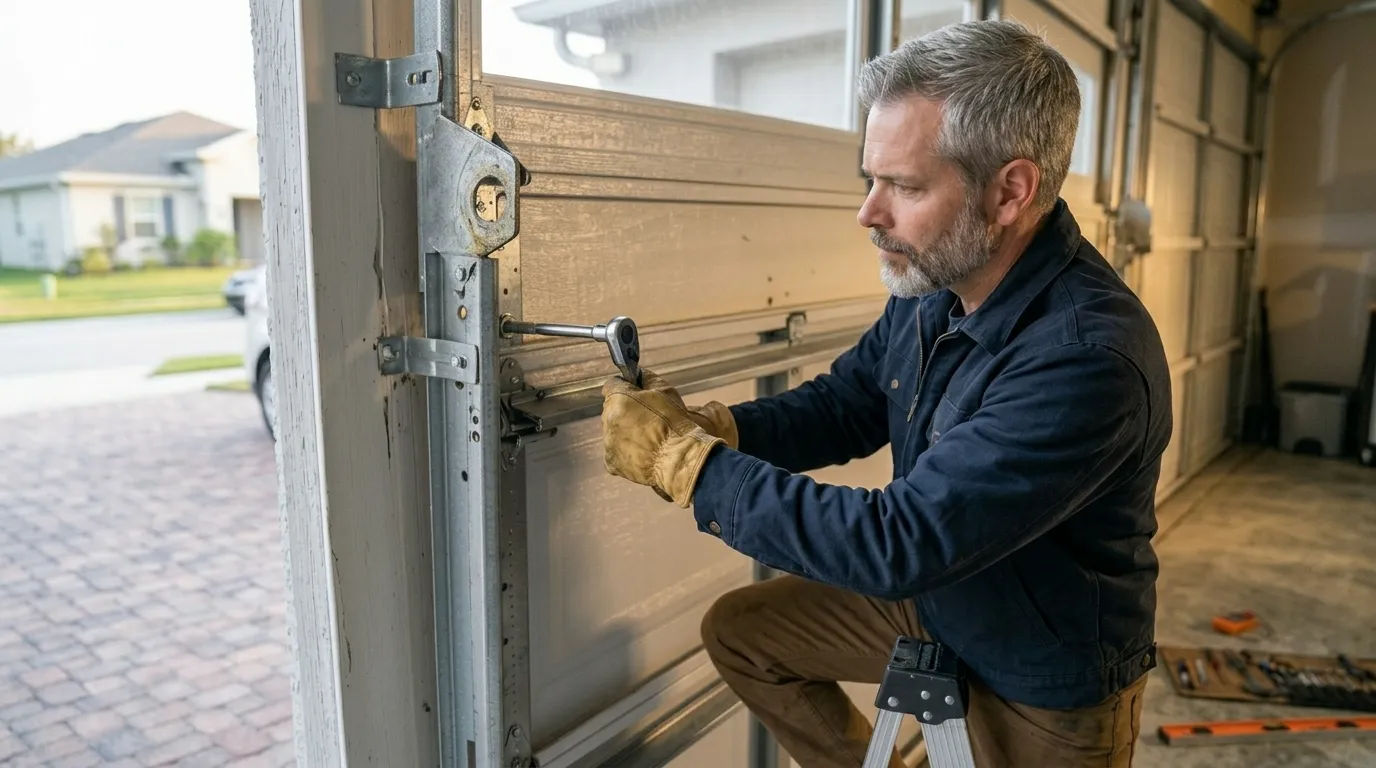
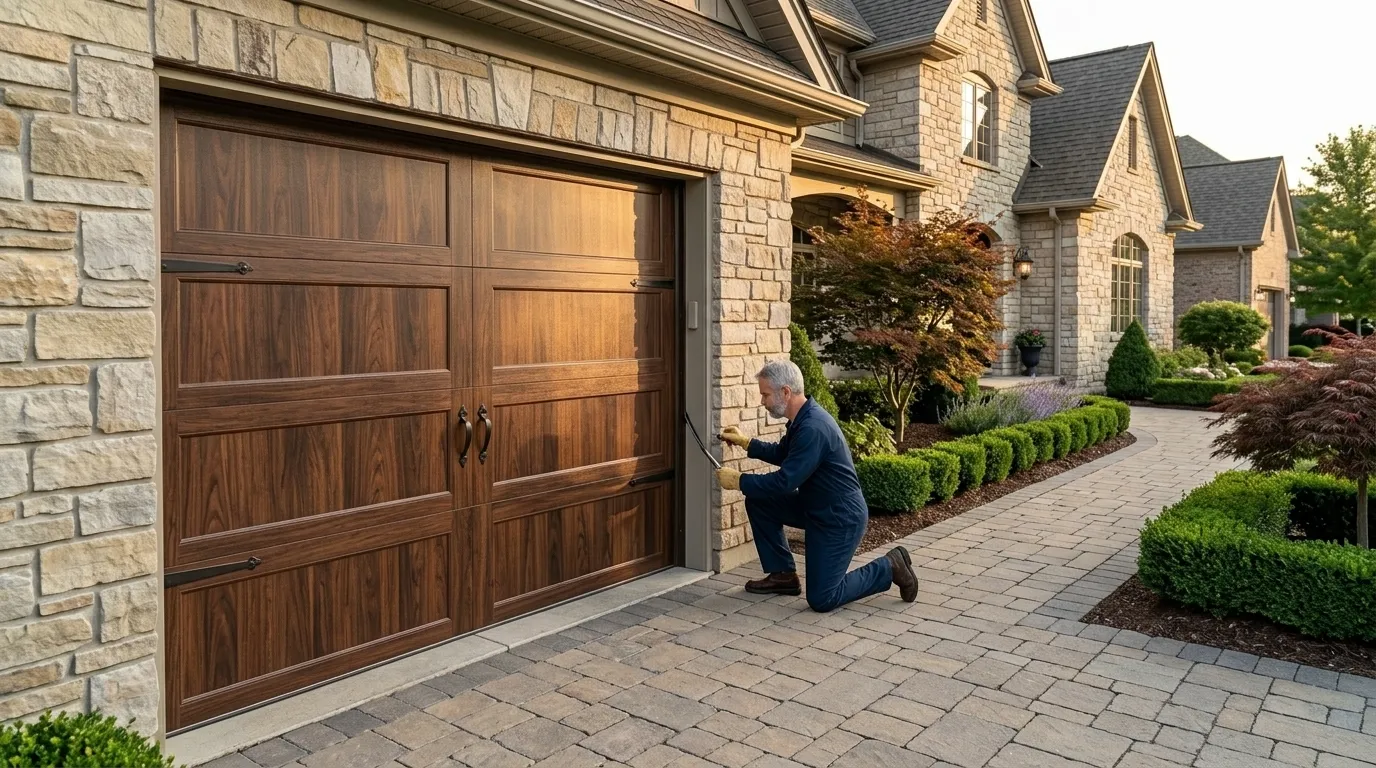
Recent Work in South San Francisco
A look at jobs our crew has been on nearby.
Why South San Francisco Calls Us
Frequently Asked Questions
How old are most garage doors in South San Francisco?
Most houses in South San Francisco were built around 1963, which puts the original garage door hardware - including torsion springs, drums, and bearings - at roughly six decades old on homes that haven't been upgraded. That's the same era as much of the wider service area, where the median build year is 1962.
Do you offer same-day spring repair in South San Francisco?
We work this job from our San Francisco location, about 9 miles away, and don't run a dispatch depot in South San Francisco. We schedule visits rather than promising same-day emergency response, so if your car is trapped inside, let us know when you call so we can help you manage it safely until the visit.
Why did my spring break with no warning?
Torsion and extension springs both fail from metal fatigue after a set number of open-close cycles, not from a single event. On a door built in the early 1960s, that fatigue has usually been building for years, and the last cycle before failure looks no different from the thousands before it.
Should I replace both springs if only one broke?
On a double door, yes - mismatched spring age means uneven tension, and that tension imbalance is what cracks panels and chews up rollers on older one-piece doors. We check both sides on every torsion job for this reason, not just the side that failed.
Need Spring Repair in South San Francisco?
Call now for straight answers on cost and timing.